
9 Day Great Migration and Ngorongoro Crater Safari
A flexible nine-day safari that tracks the Great Migration through the Serengeti in any season, combined with Tarangire, Lake Manyara and the Ngorongoro Crater.
- Duration
- 9 days
- Route
- Arusha – Tarangire – Lake Manyara – Central Serengeti – Migration area – Karatu – Ngorongoro Crater – Arusha
- Start / end
- Starts and ends in Arusha (pick-up at Kilimanjaro Airport, drop-off at your hotel or the airport)
- Best time
- Runs year-round; January to March is usually best for calving and July to October for river crossings, while April and May bring the long rains and fewer visitors.
- Trip style
- Private 4x4 Land Cruiser with driver-guide for your group only. Mid-range lodges and seasonal tented camps with full board on safari.
Tour overview
The Great Migration never stops moving, and this nine-day safari moves with it. Rather than fixing your Serengeti nights in one place, we choose your camp according to where the herds are expected during your travel dates, whether that is the calving grounds in the south, the western corridor or the Mara River in the north.
Around that core you get the full northern circuit: Tarangire's elephants, the forests and lakeshore of Lake Manyara, a night in the central Serengeti and a final game drive on the floor of the Ngorongoro Crater. Four nights in the Serengeti give your guide time to cover real distance and still enjoy unhurried sightings.
This is an ideal choice if your travel dates are fixed and you still want the best possible chance of seeing the migration, whatever the month.
Highlights
- Serengeti camp chosen to match the migration's location
- Four nights in the Serengeti ecosystem
- Ngorongoro Crater game drive with a chance of black rhino
- Lake Manyara's forest and lakeshore wildlife
- Tarangire's elephant herds and baobabs
- Year-round itinerary with comfortable mid-range lodges
Day-by-day itinerary
Day 1Arrival in Arusha
On arrival at Kilimanjaro International Airport, you are met by your guide and driven about 1 hour to your hotel in Arusha. Depending on your arrival time, you can rest after your flight, stroll through the hotel grounds or explore the town's markets. In the evening your guide joins you for a short briefing to explain the itinerary, go over what to pack for the days ahead and share the latest news on where the migration herds are moving.
Day 2Arusha to Tarangire National Park
After breakfast, drive about 2 hours to Tarangire National Park for a full day of game viewing. Tarangire's landscapes of baobabs, acacia woodland and seasonal swamps support large elephant herds, plus lions, leopards, giraffes, zebras, wildebeest and buffalo. The park is also excellent for birding, with hornbills, rollers and raptors everywhere. Lunch is a picnic at a scenic spot overlooking the Tarangire River. In the evening you check in at your lodge inside the park.
Day 3Tarangire to Lake Manyara National Park
After breakfast, drive about 1.5 hours to Lake Manyara National Park. The park entrance leads straight into a lush groundwater forest busy with baboons, blue monkeys and colorful birds. Further in, the forest opens to grassy floodplains where elephants, buffalo, giraffes and wildebeest graze, and the soda lake often attracts flamingos and pelicans. Keep an eye out for lions lounging in acacia trees. After your game drive, climb the escarpment to your lodge, which looks out over the lake.
Day 4Lake Manyara to the Central Serengeti
Today you drive into the Serengeti, stopping on the way at a viewpoint over the Ngorongoro Crater. Descend onto the short-grass plains and enter the Serengeti at Naabi Hill Gate, where you have a picnic lunch. In the afternoon, game drive to the central Serengeti around Seronera, an area rich in resident wildlife throughout the year, including lions, cheetahs and leopards. The journey takes about 6 hours with stops. Check in at your tented camp for dinner.
Day 5Central Serengeti to the Migration Herds
After an early game drive, you move to a camp positioned close to the migration. From roughly December to March this is usually around Ndutu or the southern plains, from May to June typically the western corridor near the Grumeti River, and from July to October the northern Serengeti near the Mara River, which is the longest transfer. Your guide plans the route around the latest sightings, with game viewing all the way. Arrive at camp in time for dinner.
Day 6Full Day with the Great Migration
Spend a full day among the herds. Depending on the season, you may watch newborn calves on the southern plains, see the herds crossing the Grumeti River in the western corridor, or wait at the Mara River for a crossing. Wherever the herds are, predators follow, so your guide will look for lion prides, cheetahs and hyena clans hunting at the edges. Picnic lunch in the field and return to camp in the late afternoon for sundowners.
Day 7Another Day in Migration Country
A second full day near the herds gives you more chances to see the moments that make the migration famous, and time to explore the surrounding area in depth. Head out before sunrise to see predators at their most active, or plan a full-day excursion with a picnic lunch. Away from the herds, watch for elephants, giraffes, topi and eland, and smaller predators such as servals and bat-eared foxes. Enjoy a relaxed final evening in camp.
Day 8Serengeti to Karatu
After breakfast, begin the journey back toward the Ngorongoro highlands with game viewing as you cross the Serengeti. The drive length depends on where your migration camp is located; from the north, it is a full day on the road. You may stop at Olduvai Gorge to learn about the early human fossils found there. In the late afternoon or evening you arrive at your lodge in Karatu, set amid coffee farms on the slopes below the crater rim.
Day 9Ngorongoro Crater and Return to Arusha
Descend into the Ngorongoro Crater early in the morning for your final game drive, limited to about 6 hours on the crater floor. Look for black rhino, lions, elephants, hyenas and buffalo, plus flamingos on the lake and hippos in the pools. After a picnic lunch, ascend the crater wall and drive about 3.5 hours back to Arusha. Your guide drops you at your hotel or at Kilimanjaro International Airport for your evening flight home.
What is included
- Private 4x4 Land Cruiser with pop-up roof and professional English-speaking driver-guide
- All park entry and conservation fees, including the Ngorongoro Crater service fee
- Eight nights in hotels, lodges and seasonal tented camps as listed
- All meals as listed, with picnic lunches on game-drive days
- Unlimited bottled drinking water in the vehicle
- Binoculars and in-vehicle charging
- Kilimanjaro Airport arrival transfer and final drop-off
- Government taxes and fuel
Not included
- International flights and Tanzania visa
- Travel and medical insurance
- Tips for your guide and lodge staff
- Drinks at lodges and camps
- Optional hot-air balloon flight
- Laundry and personal items
Good to know
- Your migration camp location is confirmed closer to departure based on the latest herd movements.
- When the herds are in the far north, travel days to and from the migration area are long; flights can be added to shorten them.
- Herd movements vary each year, and sightings can never be guaranteed.
- This safari combines easily with a Zanzibar beach extension at the end.
Frequently asked questions
Where will we see the migration on this safari?
It depends on your travel month. We usually aim for the southern plains around December to March, the western corridor around May and June, and the northern Serengeti from July to October.
What happens during the long rains?
In April and May the herds are usually moving through the central and western Serengeti. Some camps close, but the parks are quiet, green and still full of wildlife, and we choose an open camp nearest to the herds.
Can I upgrade the accommodation?
Yes. Every night can be upgraded to luxury lodges and camps, including premium mobile camps near the migration. Contact us for a tailored version.
Similar tours
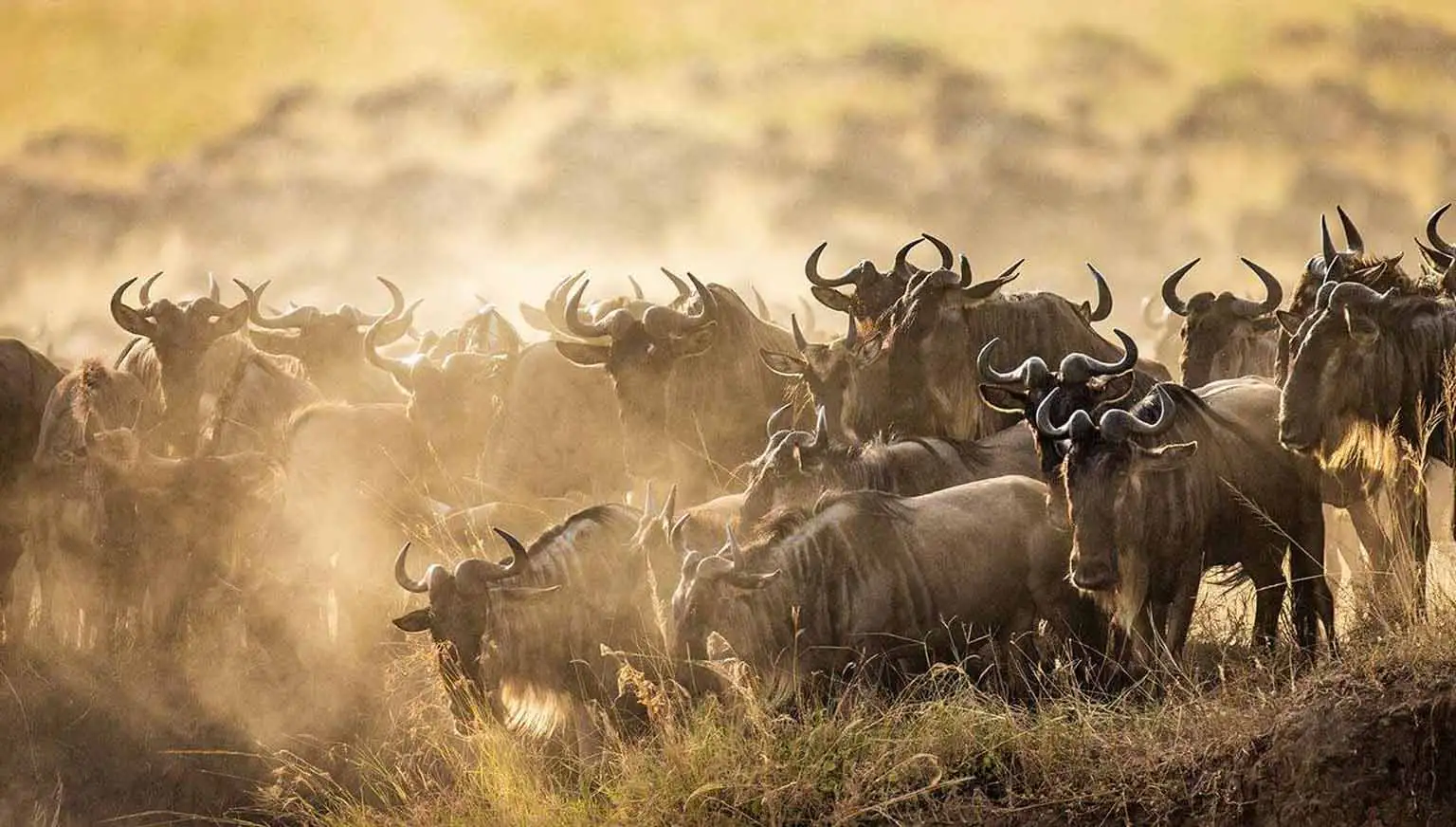 7 days7 Day Calving Season Safari in NdutuWitness the wildebeest calving season with three nights at Ndutu in the southern Serengeti, plus Tarangire, the central Serengeti and Ngorongoro Crater.From $2,080 ppView tour →
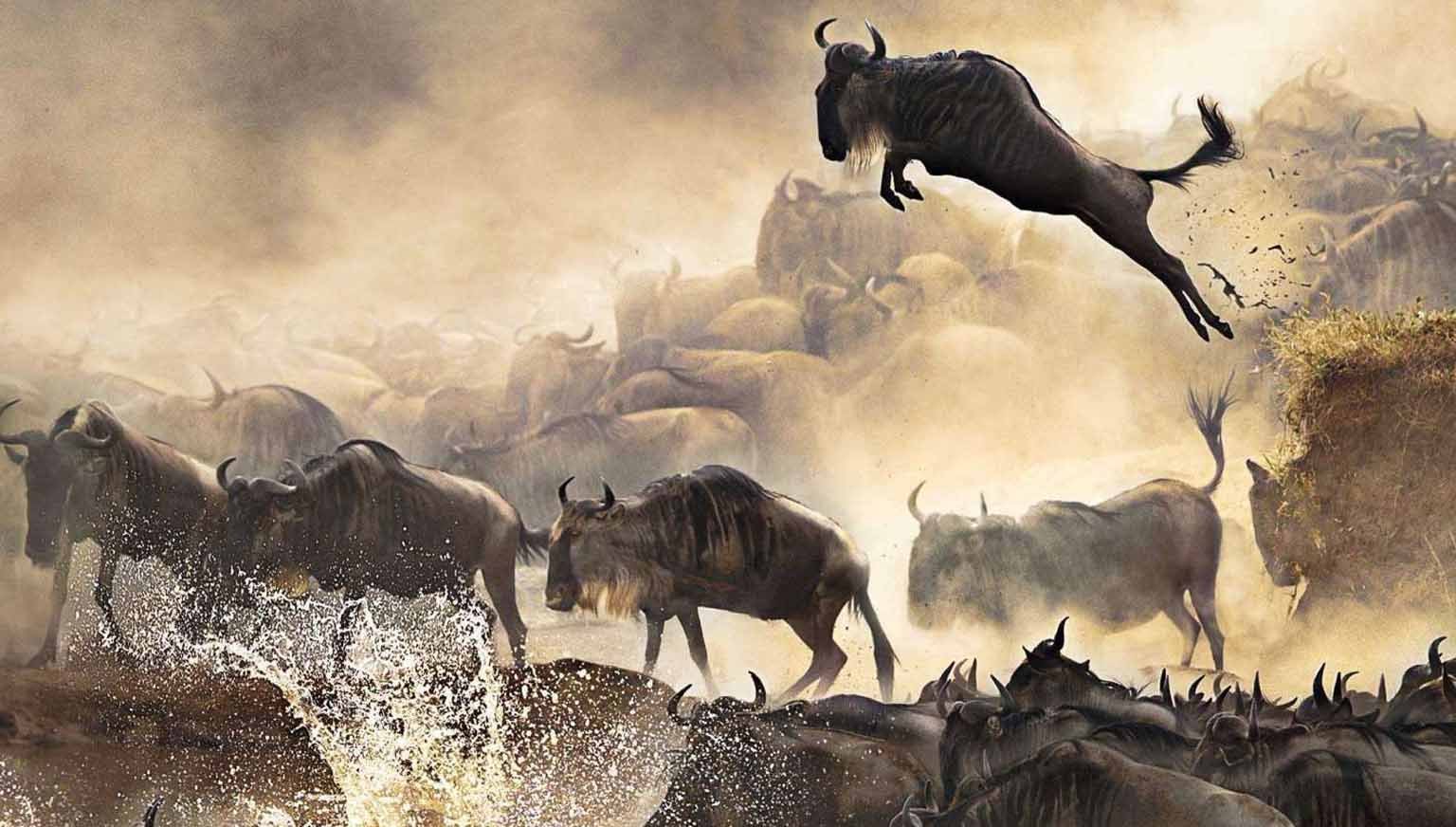 8 days8 Day Mara River Crossing SafariSpend three nights near the Mara River in the northern Serengeti for the best chance of witnessing dramatic wildebeest crossings, plus Tarangire and Ngorongoro.From $2,370 ppView tour →
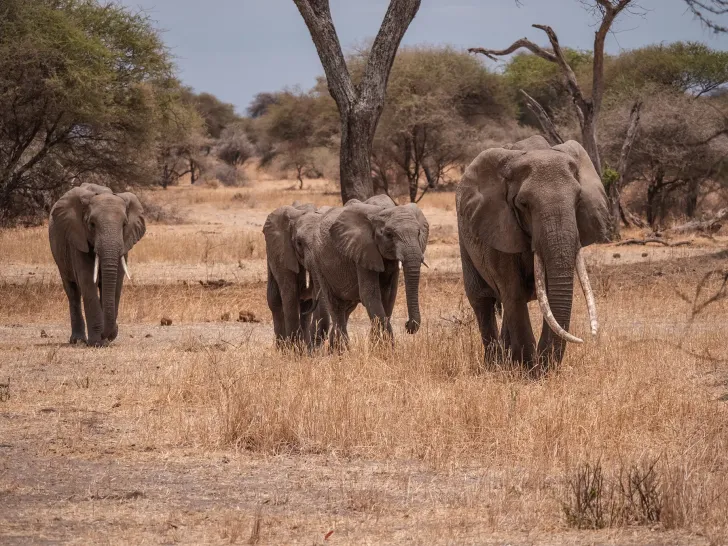 2 days2 Day Tarangire and Ngorongoro Crater SafariA short private safari pairing Tarangire's elephants and baobabs with a game drive on the floor of the Ngorongoro Crater, with a lodge night in Karatu.From $640 ppView tour →